

Applications for USB Filters
USB filters and isolators can help with electrical noise, ground loops and EMC troubleshooting. Choose the connection, data mode and power rating that match your device.
-
Reduce Noise in Audio Equipment
A suitable filter can help reduce electrical interference on a USB connection. Where a ground loop causes hum, a compatible isolator may be the better starting point.
-
Improve Stability for USB Devices
Reduce the effect of electrical noise on a compatible USB device. Check its required transfer mode and current before choosing a filter or isolator.
-
Troubleshoot streaming equipment
Investigate noise-related dropouts on webcams, controllers and other peripherals. Match the product to the device speed; a full-speed isolator cannot carry high-speed video data.
-
Support sensitive equipment
Filtering and isolation can help with noisy measurement and industrial connections. Confirm the electrical ratings and application requirements; isolation alone does not establish medical or safety approval.
Types of USB Filters
Connector shape and USB transfer speed are separate things. Check both, then confirm how much power the connected device needs. The comparison below covers the filters and isolators in our current range.
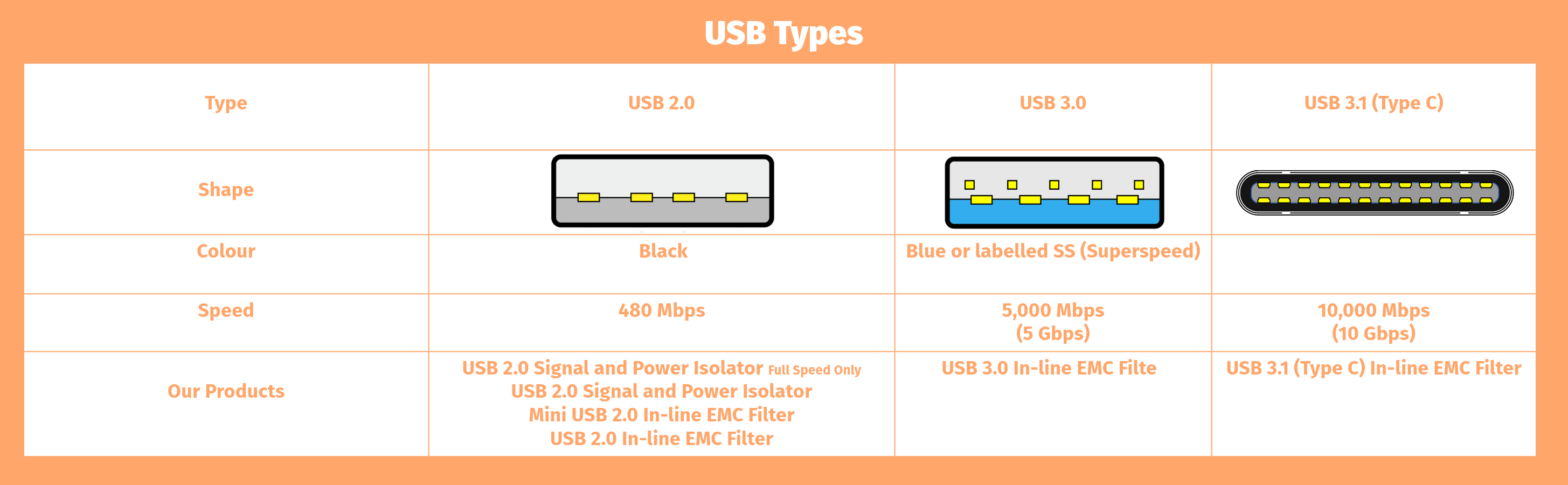
What is the difference between an isolator and a filter?
USB Isolator
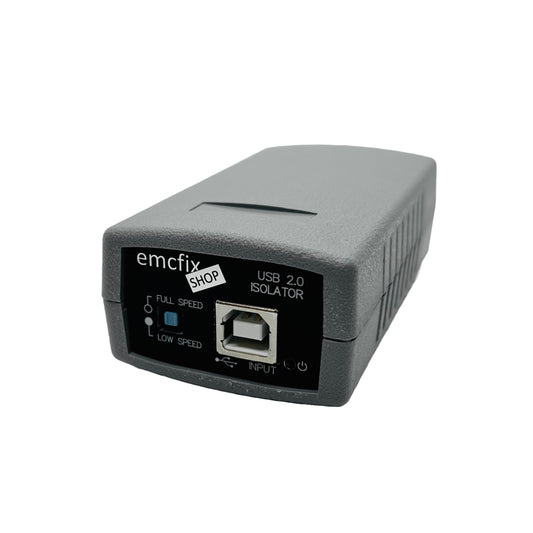
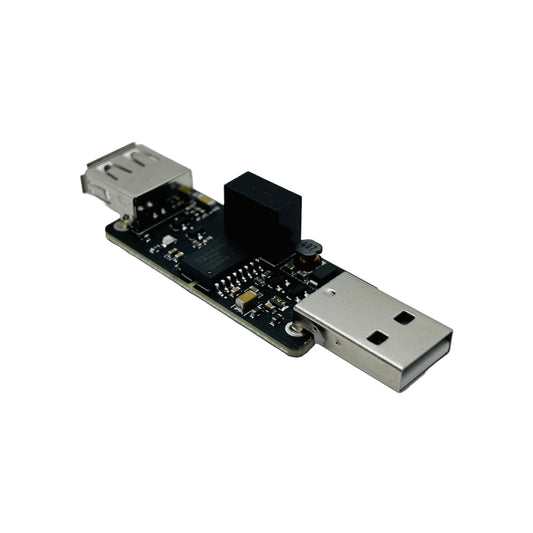
A USB isolator separates the relevant electrical paths and can help interrupt ground loops. Our selectable model supports low-speed (1.5 Mb/s) and full-speed (12 Mb/s) devices; the full-speed-only model supports 12 Mb/s devices. Choose a peripheral drawing no more than 200 mA, including startup demand.
Neither model supports 480 Mb/s high-speed USB or USB 3.x transfer modes. Check the connected device requirements before ordering.
USB Filter
A USB filter reduces unwanted electrical noise while retaining an electrical connection between the devices. Select a filter for the connector, data interface and power rating you need.
Filter performance depends on the interference source and installation. Check the result on your complete setup.
Find the right USB filter or isolator
Compare the interface and power requirements first, then open the product for its full specification.
| Product | Connection and data mode | Power rating | Choose it for |
|---|---|---|---|
| Selectable USB isolator | Type-B input / Type-A output; 1.5 or 12 Mb/s | Select peripheral demand ≤200 mA, including startup | Ground-loop troubleshooting with low-speed or full-speed USB devices. |
| Full-speed USB isolator | Type-A connections; 12 Mb/s only | Select peripheral demand ≤200 mA, including startup | Isolating a confirmed full-speed device in a compact form. |
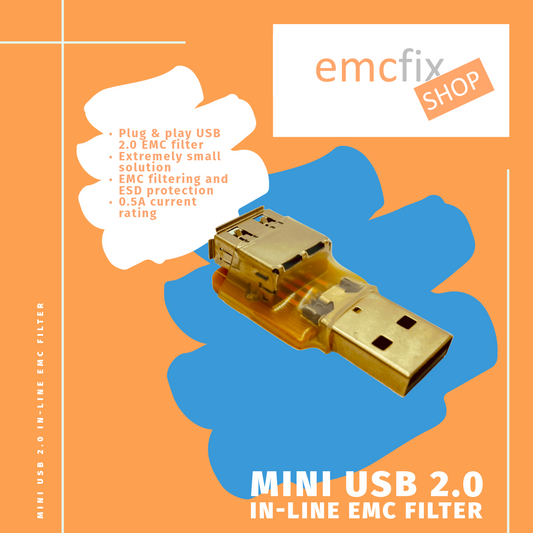
| Compact USB-A 2.0 filter | Type-A plug / socket; USB 2.0 | 5 V, up to 500 mA | In-line USB filtering where space is limited; electrical isolation is not provided. |
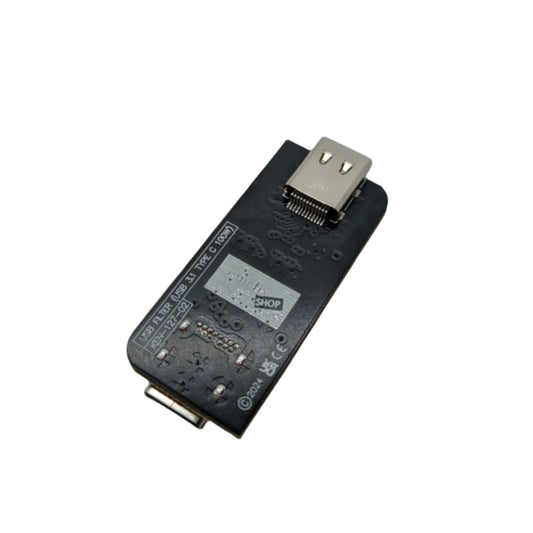
| USB-C filter | Type-C plug / socket; designed for up to 10 Gb/s | Design limit: 100 W pass-through (20 V, 5 A) | Filtering a compatible USB-C data or power connection; electrical isolation is not provided. |
The two isolators support 1.5 and/or 12 Mb/s as shown, not 480 Mb/s high-speed USB or USB 3.x transfer modes. On the selectable model, press the speed switch for low speed and release it for full speed. A connector shape alone does not establish the required transfer mode.
Shop USB filters and isolators
-
USB Signal and Power Isolator — Selectable 1.5 / 12 Mb/s
Regular price £50.00 GBPRegular price -
USB Signal and Power Isolator — 12 Mb/s Full Speed
Regular price £40.00 GBPRegular price -
Compact USB-A 2.0 In-Line Filter — 5 V, 0.5 A
Regular price £50.00 GBPRegular price -
USB-C In-Line Noise Filter – Up to 10 Gb/s, 100 W
Regular price £75.00 GBPRegular price
Building filtering into your own PCB? See the USB 3.0 component kit.
Unsure about your device speed or current? Ask us before ordering.