
What are Shielding Materials?
Shielding materials protect your electronics and cables from electromagnetic interference (EMI) and radio-frequency interference (RFI), noise that can cause instability, data errors, or test failures. They’re used everywhere from home offices and audio setups to industrial control panels and lab equipment.
-

Reduce Interference
A suitable shield can reduce unwanted coupling into or out of equipment. Performance depends on the material, frequency, seams and cable openings; one material does not shield every type of disturbance equally.
-

Improve Reliability
Reducing unwanted electromagnetic noise can improve the reliability of instruments, audio equipment and data connections. Check the result in the complete installation.
-
Help Meet EMC Compliance
Proper shielding supports smoother EMC testing and helps your products meet mandatory emission and immunity limits.
-
Fix Issues Fast
Foils, fabrics and braided sleeves offer practical ways to evaluate shielding improvements on existing equipment, often without redesigning the complete system.
Common Shielding Types
-
Foils and Tapes
Foils and tapes use thin layers of conductive metal, like copper or aluminium, to block or reflect electromagnetic fields.
They’re commonly applied to seams, enclosures, and cables to stop interference in home audio systems, computers, and industrial cabinets. -
Conductive Fabrics
These flexible fabrics are woven with or coated in metal fibres that absorb and reflect radio-frequency energy.
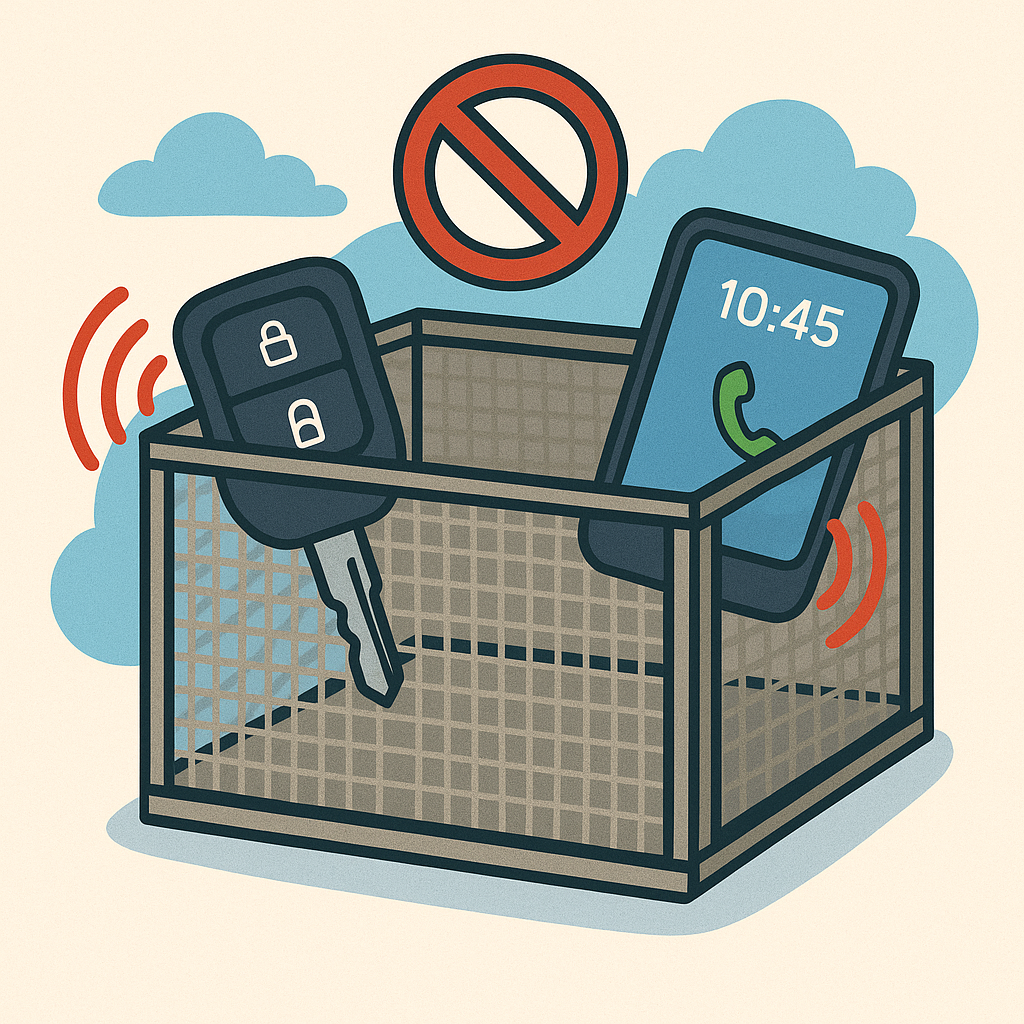
They’re ideal for lining plastic housings, creating DIY Faraday covers for routers or phones, and building temporary test enclosures. -
Gaskets and Seals
Conductive gaskets maintain electrical contact between enclosure panels, closing gaps where interference can leak in or out.
They’re used in access doors, junction boxes, and control panels that need to open for maintenance but still remain EMI-tight.
-
Braided Sleeves
Braided metal sleeves encase cables to block external noise and prevent the cable itself from radiating interference.
They’re common in data, audio, and power wiring — from hi-fi setups and car installations to industrial machine control systems. -
Shielded Boxes and Enclosures
Conductive boxes and fabric enclosures can form a Faraday shield around a device. Seams, apertures and cable connections determine the finished shielding performance.
They are used for RF troubleshooting, sensitive measurements and device-isolation experiments. Verify the assembled enclosure for any security-critical use.
-
Absorber Sheets and Coatings
These materials soak up high-frequency energy and convert it to heat rather than reflecting it.
They’re used inside equipment housings, around wireless modules, or near antennas to reduce unwanted coupling or resonance.
Use of Shielding Materials in the Home
Electrical interference can affect equipment at home as well as in industrial settings. Power supplies, LED lighting, radios and connected devices may be sources of interference or be affected by it.
Shielding materials can be useful when the source and coupling path have been identified.
- Copper and aluminium foils can improve conductive coverage around suitable enclosures.
- Conductive fabrics can form temporary covers or line housings for RF investigations.
- Braided sleeves can screen cables when the terminations provide an appropriate electrical connection.
- Gaskets and absorber sheets can address enclosure gaps or local RF coupling when selected for the relevant frequency.
Openings, cable routing and bonding all affect the outcome. Explore our shielding materials or contact us for help choosing a practical starting point.